

Table of Contents
Introduction to Budgeting in India:
Managing money is not easy when your salary or pocket money has to cover rent, food, bills, travel, family support, shopping, and savings. This is why the 50/30/20 Rule Explained for Indians is useful for salaried employees, students, and beginners who want a simple budget plan without complicated calculations.
Why Most Indians Struggle with Saving Money:
Many Indians earn regularly but still struggle to save because expenses are not planned properly. Salary comes at the beginning of the month, but by the end, there is very little left. Rent, EMIs, groceries, mobile bills, online shopping, food delivery, and subscriptions slowly reduce savings.
The problem is not always low income. Many times, the real problem is not knowing where the money is going.
Importance of a Simple Budgeting Rule:
A budget does not mean stopping all enjoyment. It simply means giving every rupee a clear purpose. A simple budgeting rule helps you decide how much to spend on needs, how much to enjoy, and how much to save for the future.
For beginners, a complex budget can feel boring. That is why a simple rule works better.
How the 50/30/20 Rule Can Help:
The 50/30/20 rule divides your monthly income into three parts: 50% for needs, 30% for wants, and 20% for savings and investments. This makes money management easier because you do not need to track every small expense in detail.
It gives you a clear starting point to control spending, build savings, and create better financial discipline.
What is the 50/30/20 Rule?
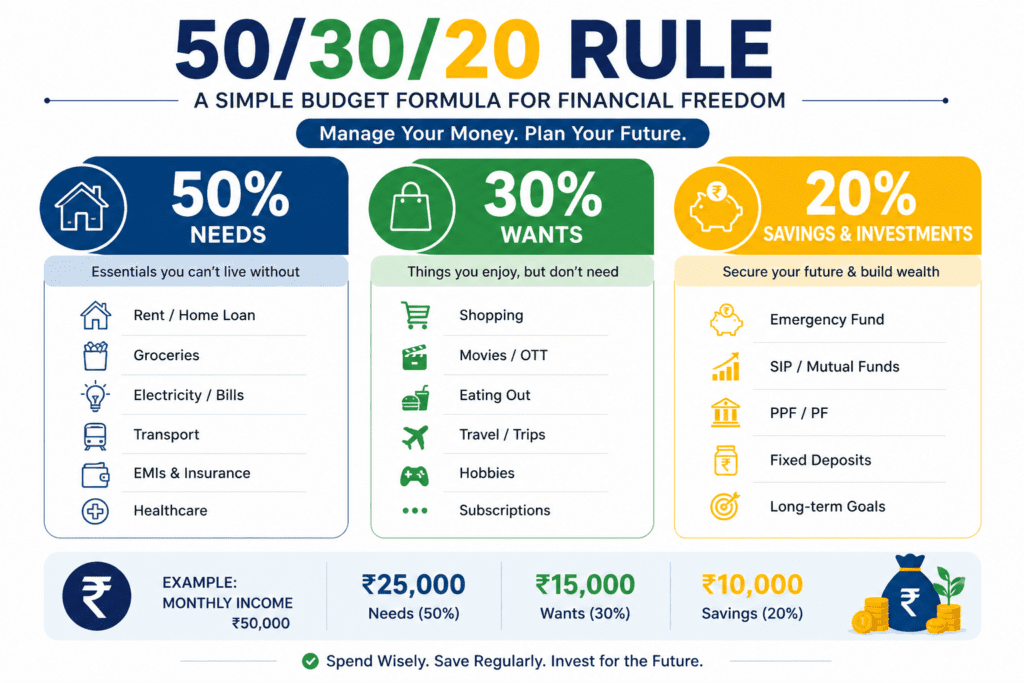
The 50/30/20 rule is a simple budgeting method that divides your monthly income into three clear parts: 50% for needs, 30% for wants, and 20% for savings and investments. It helps you understand how much money should go toward necessary expenses, lifestyle spending, and future financial security.
For example, if your monthly income is ₹30,000, then according to this rule:
| Category | Percentage | Amount |
|---|---|---|
| Needs | 50% | ₹15,000 |
| Wants | 30% | ₹9,000 |
| Savings & Investments | 20% | ₹6,000 |
Definition of the 50/30/20 Budgeting Rule:
Under this rule, needs include essential expenses like rent, groceries, electricity bills, EMIs, transport, and basic medical costs. Wants include lifestyle expenses like eating out, movies, shopping, OTT subscriptions, and travel. Savings and investments include emergency funds, SIPs, fixed deposits, PPF, recurring deposits, or any other long-term money plan.
This rule is not strict like a school formula. It is a practical guide. You can adjust the percentage based on your income, city, family responsibility, and financial goals.
Origin of the Rule: Elizabeth Warren Concept:
The 50/30/20 rule became popular through Elizabeth Warren, a personal finance expert and U.S. senator, who explained this budgeting idea in the book All Your Worth: The Ultimate Lifetime Money Plan.
The idea was simple: people should not only earn money, but also manage it in a balanced way between present needs, lifestyle comfort, and future security.
Why This Rule Became Popular Worldwide:
This rule became popular because it is easy to understand and simple to apply. You do not need advanced financial knowledge, complex apps, or detailed accounting skills.
For Indians, this rule is useful because it works for different income levels. A student can use it with pocket money, a salaried person can use it with monthly salary, and a beginner investor can use it to build regular savings discipline.
Understanding the 3 Categories (50/30/20 Breakdown)
The 50/30/20 rule becomes easier when you understand what comes under each category. Many people make mistakes because they mix needs with wants. For example, basic food is a need, but ordering expensive food every weekend is a want.
50% Needs (Essential Expenses):
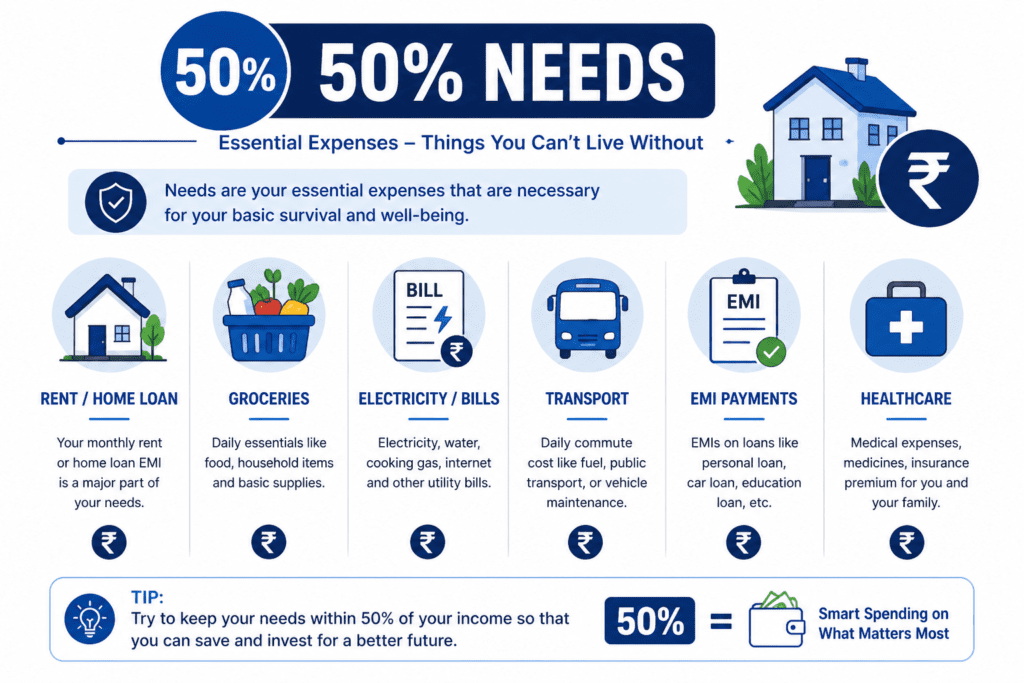
Needs are expenses that are necessary for daily life. These are the payments you cannot avoid if you want to live, study, work, and maintain basic stability.
What Comes Under “Needs” in India:
In India, needs usually include rent, hostel fees, groceries, electricity bill, mobile recharge, internet bill, transport, school or college fees, loan EMI, insurance premium, and basic medical expenses.
For salaried employees, needs may also include family support, home loan EMI, fuel costs, and children’s education expenses.
Examples: Rent, Groceries, EMI, Bills:
If your monthly income is ₹40,000, then 50% means around ₹20,000 should ideally go toward needs.
Example needs budget:
| Expense | Monthly Amount |
|---|---|
| Rent/Hostel | ₹8,000 |
| Groceries/Food | ₹5,000 |
| Electricity & Internet | ₹2,000 |
| Transport | ₹2,500 |
| EMI/Insurance | ₹2,500 |
| Total Needs | ₹20,000 |
How to Control Essential Expenses:
To control needs, compare rent before shifting, avoid unnecessary EMIs, use prepaid plans wisely, reduce electricity waste, and plan groceries before shopping. Even small savings in essential expenses can improve your monthly budget.
30% Wants (Lifestyle Spending):
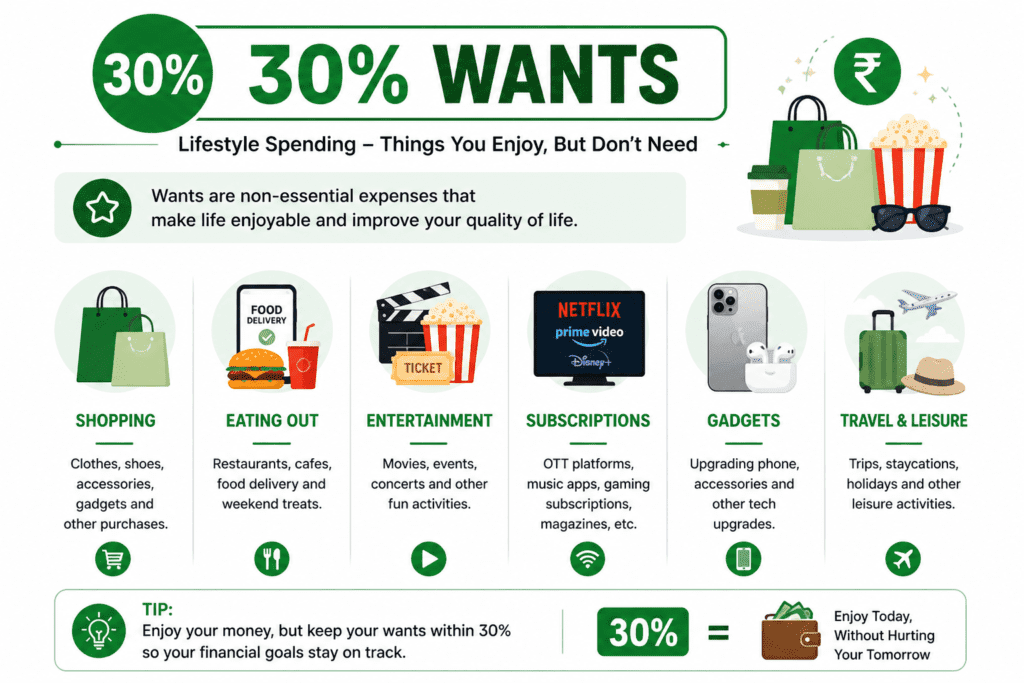
Wants are expenses that improve comfort and lifestyle but are not necessary for survival. You can enjoy them, but they should not damage your savings.
What Counts as “Wants”:
Wants include eating out, online food orders, movies, OTT subscriptions, shopping, gadgets, weekend trips, premium memberships, and luxury purchases.
These expenses are not bad. The problem starts when wants become bigger than your income can handle.
Examples: Eating Out, Subscriptions, Shopping:
If your income is ₹40,000, then 30% means around ₹12,000 can be used for wants.
You can divide it like this:
| Want Expense | Monthly Amount |
|---|---|
| Eating Out | ₹3,000 |
| Shopping | ₹4,000 |
| Subscriptions | ₹1,000 |
| Entertainment | ₹2,000 |
| Travel/Outings | ₹2,000 |
| Total Wants | ₹12,000 |
How to Avoid Overspending:
Set a fixed monthly limit for wants. Before buying anything, ask: “Do I need this now, or do I only want it?” Also avoid impulse buying during online sales, because discounts can still make you spend more than planned.

20% Savings & Investments:
This is the most important part of the 50/30/20 rule. Savings and investments protect your future and reduce financial stress.
Importance of Saving First:
Many people save whatever is left after spending. This usually does not work. A better method is to save first and spend later. As soon as your salary or pocket money comes, separate the savings amount.
Emergency Fund, SIP, FD, PPF:
Your 20% savings can go into different options such as:
- Emergency fund for medical bills, job loss, or urgent family needs.
- SIP in mutual funds for long-term wealth creation.
- Fixed Deposit or Recurring Deposit for safer short-term savings.
- PPF for long-term, tax-friendly savings.
- Savings account balance for quick access.
👉🏻 See our guide on emergency fund planning
Ideal Savings Strategy for Beginners:
Beginners should first build an emergency fund before taking higher investment risk. After that, they can start a small SIP, open an RD, or use PPF for long-term goals.
Even if you cannot save 20% immediately, start with 5% or 10%. The goal is to build the habit first, then increase the amount slowly.
Real-Life Examples of 50/30/20 Rule in India:
Now let’s understand the 50/30/20 rule with practical Indian salary examples. These examples are only for learning. Your actual budget may change based on your city, rent, family responsibility, EMI, education costs, and lifestyle.
Example 1 – Monthly Salary ₹20,000:
If your monthly salary is ₹20,000, the 50/30/20 rule will divide your income like this:
| Category | Percentage | Amount |
|---|---|---|
| Needs | 50% | ₹10,000 |
| Wants | 30% | ₹6,000 |
| Savings & Investments | 20% | ₹4,000 |
| Total | 100% | ₹20,000 |
Needs Breakdown:
| Need Expense | Monthly Amount |
|---|---|
| Rent/Hostel | ₹4,000 |
| Food/Groceries | ₹3,000 |
| Transport | ₹1,000 |
| Mobile/Internet | ₹500 |
| Bills/Basic Medical | ₹1,500 |
| Total Needs | ₹10,000 |
Wants Breakdown:
| Want Expense | Monthly Amount |
|---|---|
| Eating Out | ₹1,500 |
| Shopping | ₹2,000 |
| Entertainment | ₹1,000 |
| Subscriptions | ₹500 |
| Other Lifestyle Spending | ₹1,000 |
| Total Wants | ₹6,000 |
Savings Breakdown:
| Savings Option | Monthly Amount |
|---|---|
| Emergency Fund | ₹2,000 |
| SIP/RD/FD | ₹1,500 |
| Extra Savings | ₹500 |
| Total Savings | ₹4,000 |
For a ₹20,000 salary, saving ₹4,000 may look difficult in the beginning. If rent or family responsibility is high, you can start with ₹1,000–₹2,000 and slowly increase it.

Example 2 – Monthly Salary ₹50,000:
If your monthly salary is ₹50,000, the 50/30/20 rule gives more flexibility.
| Category | Percentage | Amount |
|---|---|---|
| Needs | 50% | ₹25,000 |
| Wants | 30% | ₹15,000 |
| Savings & Investments | 20% | ₹10,000 |
| Total | 100% | ₹50,000 |
Needs Breakdown:
| Need Expense | Monthly Amount |
|---|---|
| Rent | ₹10,000 |
| Groceries | ₹6,000 |
| Transport/Fuel | ₹3,000 |
| Electricity/Internet | ₹2,000 |
| EMI/Insurance | ₹4,000 |
| Total Needs | ₹25,000 |
Wants Breakdown:
| Want Expense | Monthly Amount |
|---|---|
| Eating Out | ₹3,000 |
| Shopping | ₹4,000 |
| Entertainment | ₹2,000 |
| Travel/Outings | ₹3,000 |
| Subscriptions/Gadgets | ₹3,000 |
| Total Wants | ₹15,000 |
Savings Breakdown:
| Savings Option | Monthly Amount |
|---|---|
| Emergency Fund | ₹3,000 |
| SIP | ₹4,000 |
| FD/RD/PPF | ₹2,000 |
| Extra Savings | ₹1,000 |
| Total Savings | ₹10,000 |
With a ₹50,000 salary, the main focus should be avoiding lifestyle inflation. When income increases, wants also increase. Keep savings automatic so that you do not spend the investment amount by mistake.
Example 3 – College Student Budget:
Students can also use the 50/30/20 rule with pocket money. Suppose a college student gets ₹5,000 per month.
| Category | Percentage | Amount |
|---|---|---|
| Needs | 50% | ₹2,500 |
| Wants | 30% | ₹1,500 |
| Savings | 20% | ₹1,000 |
| Total | 100% | ₹5,000 |
Pocket Money Allocation:
| Expense Type | Monthly Amount |
|---|---|
| Food/Snacks | ₹1,200 |
| Transport | ₹600 |
| Study Material | ₹700 |
| Total Needs | ₹2,500 |
For wants, the student can keep ₹1,500 for movies, outings, subscriptions, small shopping, or online orders.
Savings Strategy for Students:
A student can save ₹1,000 every month in a savings account or recurring deposit. This amount can be used for exam fees, books, online courses, emergency travel, or future goals.
The main purpose is not only saving money. The purpose is to build the habit of money discipline from an early age.
How to Apply the 50/30/20 Rule in India (Step-by-Step)
Knowing the 50/30/20 rule is easy, but applying it properly needs discipline. You do not need advanced financial knowledge. You only need to understand your income, expenses, and savings goal clearly.
Step 1 – Calculate Your Monthly Income
First, calculate your actual monthly income after deductions. For salaried employees, this means your in-hand salary, not your CTC. For students, it can be pocket money, scholarship money, or part-time income.
For example, if your salary is ₹35,000 after PF, tax, and other deductions, use ₹35,000 for budgeting.
Step 2 – Track Your Expenses
Before creating a budget, track your expenses for at least one month. Check where your money is going: rent, groceries, mobile recharge, electricity, transport, shopping, food delivery, subscriptions, and EMIs.
You can write expenses in a notebook, Google Sheets, or any expense tracker app.
Step 3 – Categorize into Needs, Wants, Savings
Now divide every expense into three categories: needs, wants, and savings.
Rent, groceries, bills, EMIs, and transport are needs. Shopping, movies, eating out, subscriptions, and weekend trips are wants. Emergency fund, SIP, FD, RD, and PPF come under savings and investments.
This step will show whether your money is going in the right direction.
Step 4 – Adjust Percentages if Needed
The 50/30/20 rule is a guide, not a fixed law. If your rent or family responsibility is high, your needs may cross 50%. In that case, reduce wants first instead of stopping savings completely.
For example, you can follow 60/20/20 for some time until your income increases.
Step 5 – Automate Your Savings
The best way to save money is to automate it. As soon as your salary comes, transfer your savings amount to a separate account, SIP, RD, or emergency fund.
Do not wait until the end of the month. If you save after spending, there may be nothing left.
👉🏻 See our guide on how to save money as a student
Is the 50/30/20 Rule Practical in India?
The 50/30/20 rule is practical for many Indians because it gives a simple structure to monthly money management. It is especially useful for salaried employees, students, and beginners who want to control spending without creating a complicated budget.
Challenges for Indian Salaries:
In India, many people have high fixed expenses such as rent, education fees, home loan EMI, vehicle loan EMI, medical costs, and family support. In metro cities like Mumbai, Delhi, Bengaluru, Hyderabad, and Pune, rent alone can take a large part of income.
Because of this, keeping needs within 50% may not always be easy.
When This Rule May Not Work:
This rule may not work perfectly for people with very low income, high debt, irregular income, or heavy family responsibility. It may also be difficult for students living away from home because hostel fees, food, and travel can consume most of their pocket money.
In such cases, the goal should be progress, not perfection.
Modified Versions: 60/20/20 or 70/20/10:
You can adjust the rule based on your situation:
| Modified Rule | Best For | Meaning |
|---|---|---|
| 60/20/20 | People with higher essential expenses | 60% needs, 20% wants, 20% savings |
| 70/20/10 | Low-income earners or students | 70% needs, 20% wants, 10% savings |
| 50/20/30 | Aggressive savers | 50% needs, 20% wants, 30% savings |
The important point is to save something every month, even if it is only ₹500 or ₹1,000 in the beginning.
Common Mistakes to Avoid:
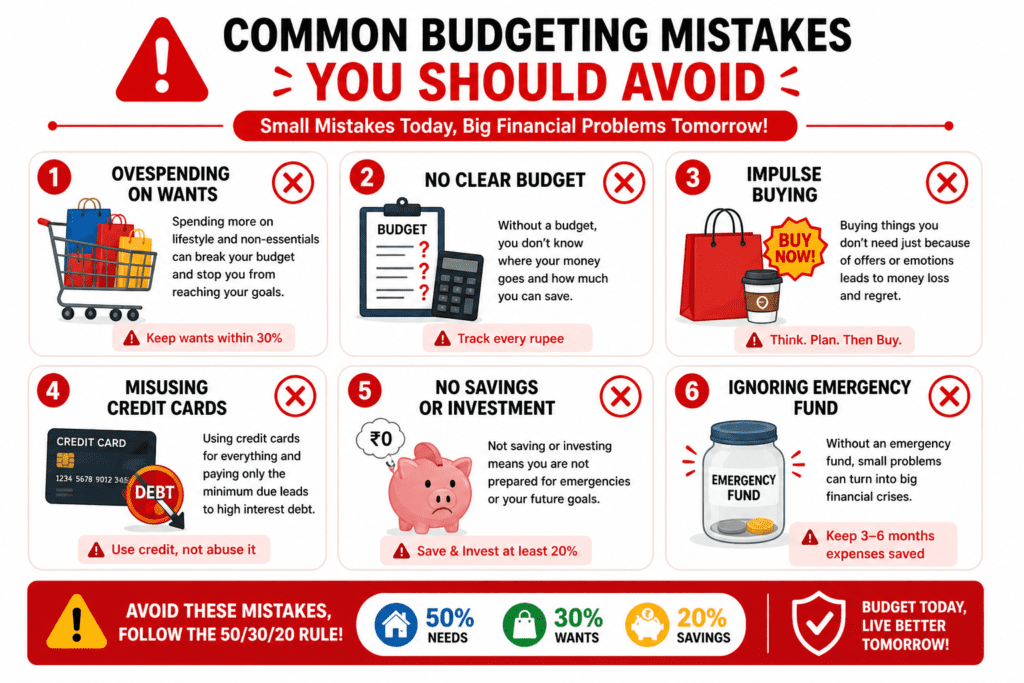
The 50/30/20 rule works only when you use it honestly. Many people fail because they do not track expenses properly or they treat lifestyle spending as necessary spending.
1. Ignoring Savings Completely:
The biggest mistake is saving only what is left after spending. This usually leads to zero savings. Always separate your savings first, then spend the remaining money.
2. Treating Wants as Needs:
A mobile recharge is a need, but an expensive phone upgrade is a want. Basic food is a need, but regular food delivery is a want. Understanding this difference is very important.
3. Not Adjusting for Income Level:
Do not copy someone else’s budget blindly. A person earning ₹20,000 and a person earning ₹1 lakh cannot follow the same lifestyle. Adjust the rule based on your income, city, and responsibilities.
4. No Emergency Fund:
Without an emergency fund, even one medical bill, job loss, or urgent family expense can disturb your full budget. Before investing aggressively, build at least a small emergency fund.
[Internal Link: See our guide on emergency fund planning]
50/30/20 Rule vs Other Budgeting Methods:
The 50/30/20 rule is not the only budgeting method. There are other systems like zero-based budgeting, the envelope system, and the pay yourself first method. Each method has its own benefit, but beginners should choose the one they can follow consistently.
1. Zero-Based Budgeting:
Zero-based budgeting means giving every rupee a fixed purpose before the month starts. Your income minus expenses, savings, and investments should become zero.
For example, if your income is ₹40,000, you plan where the full ₹40,000 will go: rent, groceries, EMI, savings, SIP, shopping, and entertainment.
This method is useful for people who want full control, but it needs more tracking and discipline.
2. Envelope System:
The envelope system is an old but effective budgeting method. In this method, you divide money into different envelopes or categories like groceries, travel, shopping, bills, and savings.
Earlier, people used physical cash envelopes. Today, you can use separate bank accounts, UPI wallets, or digital categories.
This method is good for people who overspend in one area, especially shopping, food delivery, or entertainment.
Which One is Best for Beginners?
For beginners, the 50/30/20 rule is usually the best starting point because it is simple, flexible, and easy to remember. You do not need to track every rupee perfectly from day one.
Here is a simple comparison:
| Budgeting Method | Best For | Difficulty | Main Benefit |
|---|---|---|---|
| 50/30/20 Rule | Beginners | Easy | Simple salary division |
| Zero-Based Budgeting | Detailed planners | Medium | Every rupee gets a purpose |
| Envelope System | Cash or category-based spenders | Easy | Controls overspending |
| Pay Yourself First | Savers and investors | Easy | Builds saving discipline |
If you are new to budgeting, start with the 50/30/20 rule for 2–3 months. Once you understand your spending habits, you can shift to zero-based budgeting or combine both methods for better control.
FAQs:
Is the 50/30/20 Rule Suitable for Low Income?
Yes, but low-income earners may need to modify it. If your essential expenses are high, you can follow a 70/20/10 rule, where 70% goes to needs, 20% to wants, and 10% to savings. The main goal is to save something every month, even if the amount is small.
How Much Should I Save Every Month in India?
A good starting point is to save at least 20% of your monthly income. For example, if your income is ₹30,000, try to save ₹6,000. If this is difficult, start with ₹1,000 or ₹2,000 and increase slowly as your income grows.
Can Students Use the 50/30/20 Rule?
Yes, students can use this rule with pocket money, scholarship money, or part-time income. They can keep 50% for food, transport, and study material, 30% for outings or subscriptions, and 20% for savings. This helps build money discipline early.
What If My Expenses Exceed 50%?
If your needs are more than 50%, do not panic. First, check whether some wants are being counted as needs. Then reduce lifestyle spending, avoid unnecessary EMIs, and try a modified budget like 60/20/20 or 70/20/10 until your income improves.
Is 20% Savings Enough?
For beginners, 20% savings is a good target. It can help you build an emergency fund, start SIPs, or save for short-term goals. Later, when your income increases, you can move toward saving 25% or 30% for faster financial growth.
Conclusion:
Key Takeaways:
The 50/30/20 rule is a simple budgeting method that divides your income into 50% needs, 30% wants, and 20% savings and investments. It is useful for Indian salaried employees, students, and beginners because it gives a clear structure to monthly money management.
1. Simple Action Plan to Start Today:
Start by calculating your monthly in-hand income. Then track your expenses for one month and divide them into needs, wants, and savings. If the exact 50/30/20 ratio does not fit your situation, adjust it without completely ignoring savings.
2. Final Thoughts for Long-Term Financial Discipline:
Budgeting is not about restricting your life. It is about using your money with purpose. Start with your next salary or pocket money. Divide it before spending anything, and slowly build the habit of saving, investing, and spending wisely.